Conceptualizing E-Commerce Modules.
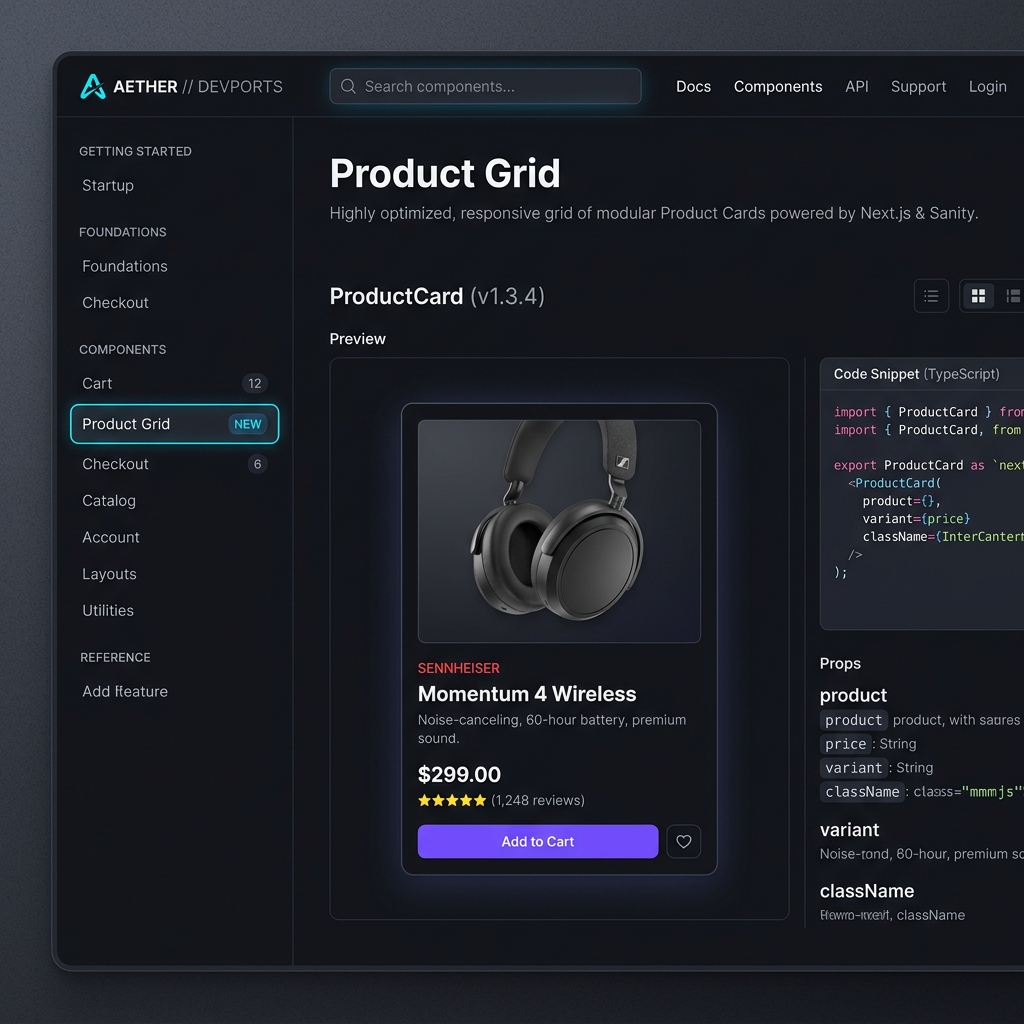
Inspired by the scaling challenges of Ayooh Naturals, I am currently validating the core requirements of modern e-commerce to design a flexible, reusable component library powered by Next.js and Sanity.
Type
Open Source / Startup Toolkit
Stack
Next.js, Prisma, Sanity, Tailwind
Phase
Validation
Status
In Progress
Context
The Inspiration
While building various custom storefronts (like Ayooh Naturals), I realized that 80% of the underlying logic—cart state, product variant mapping, and CMS integration—remains the same across projects, yet is often rebuilt from scratch.
The Problem
Shopify themes are rigid, and building custom headless architectures from zero takes too long for mid-tier brands. Creators need the design flexibility of custom code without the massive initial engineering overhead.
The Proposed Solution
A plug-and-play suite of React components and pre-configured Sanity schemas. The vision is to bridge the gap by providing production-ready carts, checkout flows, and product grids that can be styled effortlessly from day one.
The Idea
“E-commerce development shouldn't mean reinventing the shopping cart every time.”
The Origin
After successfully shipping custom stores, I started identifying the best abstraction layers. The idea has evolved from a personal boilerplate into an ambitious vision for a comprehensive module suite aimed at empowering other developers and creators.
Core Assumptions
- → Developers prioritize flexibility and easy integrations over locked-in vendor ecosystems.
- → Sanity CMS is the ideal backend for rich, content-driven product catalogs.
- → Performance (via Next.js server components) is a non-negotiable requirement for modern conversion rates.
Build Process
Architecting the Core Primitives
The planned first phase involves decoupling the UI from state management. I intend to design a universal Cart Provider utilizing Zustand for snappy client-side updates, ensuring it will integrate flawlessly with various payment gateways down the line.
import { create } from 'zustand';

export const useCartStore = create((set) => ({
  items: [],
  addItem: (product) => set((state) => ({
    items: [...state.items, product]
  })),
  removeItem: (id) => set((state) => ({
    items: state.items.filter(item => item.id !== id)
  })),
  clearCart: () => set({ items: [] })
}));
State Management Vision
Planning to opt for Zustand over React Context to prevent unnecessary re-renders in deep component trees during cart updates.
Sanity Schema Standardization
The next step is developing standardized, modular schemas for Sanity CMS. This will include creating portable text blocks tailored for product descriptions, dynamic variant structures, and multi-currency pricing models.
Data Modeling Concept
Envisioning a recursive category schema that allows deep, dynamic navigation menus generated entirely from the CMS.
Developer Experience Goal
Aiming to build a CLI script to instantly scaffold the Sanity studio with the required e-commerce document types.
Validation & Reality
Currently undergoing ideation and technical validation within internal workflows. The goal is to achieve a 60% reduction in setup time for new headless storefronts once built.
“If I can have a battle-tested cart and CMS schema ready on day one, I can focus entirely on the brand's unique visual identity.”
What Worked
- • Defining Headless UI component architecture concepts
- • Outlining Sanity schema abstractions
- • Researching Next.js App Router performance optimizations
What Didn't
- • Finding the right balance for initial prop structures
- • Conceptualizing international shipping logic early state models
Challenges
The Variant Problem
Anticipating the challenge of managing complex product matrices (e.g., Size, Color, Material) cleanly across both the Sanity backend and the Next.js frontend.
Theme Agnosticism
Planning how to ensure the UI components look great by default but can be entirely overridden using Tailwind without battling CSS specificity wars.
Outcome & Key Learnings
The Current State
The idea is well-defined and research is actively informing the technical architecture. Development of the core modules will begin soon to form the foundation for upcoming client projects.
Key Learnings
- 01 Abstraction is a balancing act—too flexible means complicated APIs, too rigid defeats the purpose.
- 02 Headless commerce relies heavily on robust data synchronization strategies.
- 03 Pre-built, accessible accessibility features in UI primitives are highly valued by developers.
Next Steps
- / Begin coding the Core UI primitives and Cart Store.
- / Draft the initial Sanity e-commerce schema structures.
- / Finalize the Stripe & Razorpay webhook integration specs.
System Design
Current Phase
Future Users
Developers & Creators